Excellent craftsmanship, exquisite production, high quality and reasonable price

Master industry information and stay up-to-date with trends in real-time
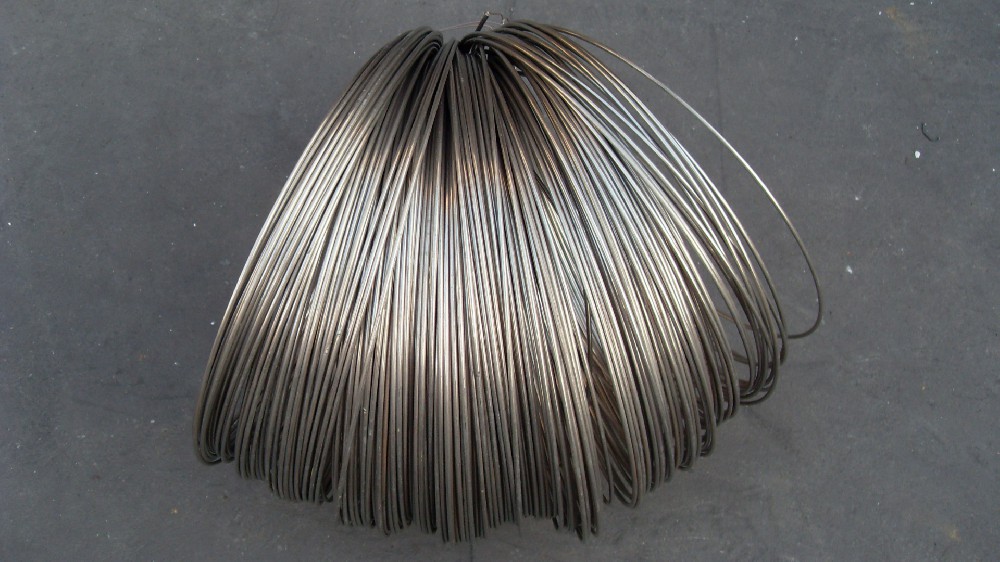
High temperature alloy wire has a wide range of applications in various fields, including aerospace, nuclear energy, petrochemicals, etc.Aerospace industryIn the aerospace industry, high-temperature alloy wire is mainly used to manufacture static and rotating components in aircraft engines, such as blades, disks, rings, etc. These components need to work in high temperature environments with significant differences, and the excellent high-temperature performance and corrosion resistance of high-temperature alloy wire make it a better material.Nuclear power industryIn the nuclear energy industry, high-temperature alloy wires are used to manufacture elastic components and supports for nuclear energy applications. Nuclear energy equipment needs to operate stably in high temperature and radiation environments, and the excellent performance of high-temperature alloy wires makes them a better material choice.Petroleum and chemical industryIn the field of petroleum and chemical engineering, high-temperature alloy wire is used to manufacture components and pipelines that are resistant to corrosion, high temperature and high pressure environments. Due to its excellent corrosion resistance and high-temperature strength, high-temperature alloy wire performs well in these fields and can withstand significantly different working conditions.Other application areasIn addition, high-temperature alloy wires are also used in thermal and nuclear power equipment, ship power systems, heavy-duty locomotives, chemical, pharmaceutical, and refining industries. For example, in thermal and nuclear power, high-temperature alloy wires are used for components such as turbine blades, fasteners, combustion chambers, nozzles, etc; In marine power systems, it is used for marine engines, gas turbines, etc; On heavy-duty locomotives, it is used for locomotive engines, high-temperature bearings, etc.
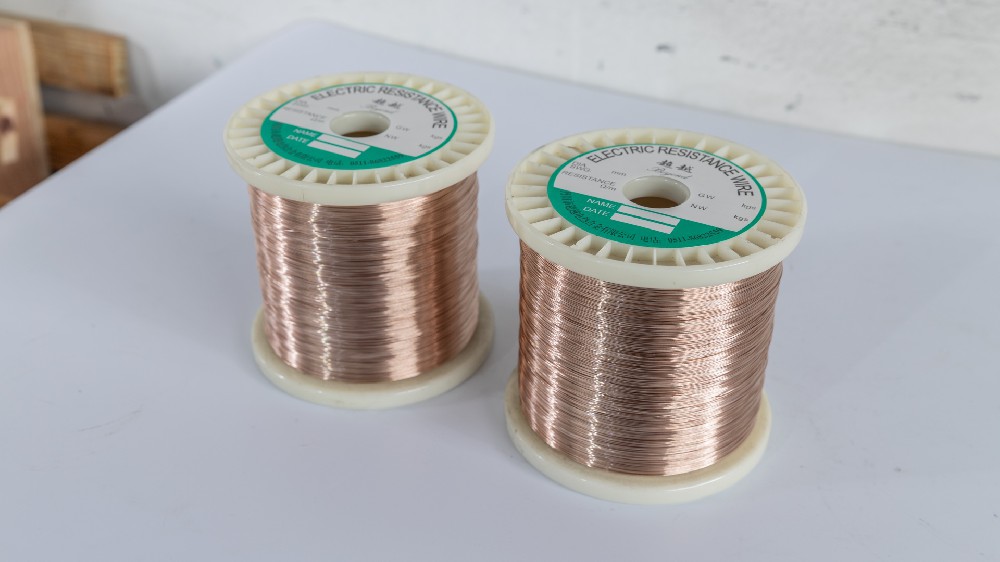
The smelting methods of copper nickel alloys mainly include the following:1.Spray melting method: Copper and nickel powders are mixed and melted, and then rapidly cooled and solidified by air flow spraying. The alloy prepared by this method has a uniform structure and fine grains, with high mechanical properties.2.Electrolytic deposition method: Soak electrolytes containing copper and nickel separately on two electrodes, and apply voltage to cause copper and nickel ions to precipitate on their respective electrodes. The alloy prepared by this method has a uniform composition and good microstructure.3.Reaction sintering method: Powder containing copper and nickel is placed in a high-temperature furnace and subjected to sintering reaction at a good temperature, allowing the two metal powders to diffuse into each other and form an alloy. The alloy prepared by this method has high density and good mechanical properties.4.Powder metallurgy method: Copper and nickel powders are mixed in proportion and subjected to compression and sintering processes to form alloy billets. Then, through heat treatment or processing, alloy products with the desired shape and properties are obtained.5.Chemical deposition method: By adding different metal ions to the synthesis solution and utilizing the effects of reducing agents and complexing agents, copper and nickel metals are deposited on the substrate to form an alloy thin film. This method can be used to prepare thin film materials.Smelting method of waste nickel and copper:1.Chemical separation and purification: Firstly, chemical separation and purification are carried out on waste nickel and copper to remove impurities and other harmful substances. The commonly used methods include chemical methods (such as dissolution, extraction, displacement), physical methods (such as magnetic separation, reselection), and electrochemical methods (such as electrolysis, electrodeposition).2.Electric furnace melting: Put waste nickel and copper into an electric furnace, heat it to the melting point through electrical energy, and then pour out the melted waste nickel and copper to obtain a molten nickel copper alloy.
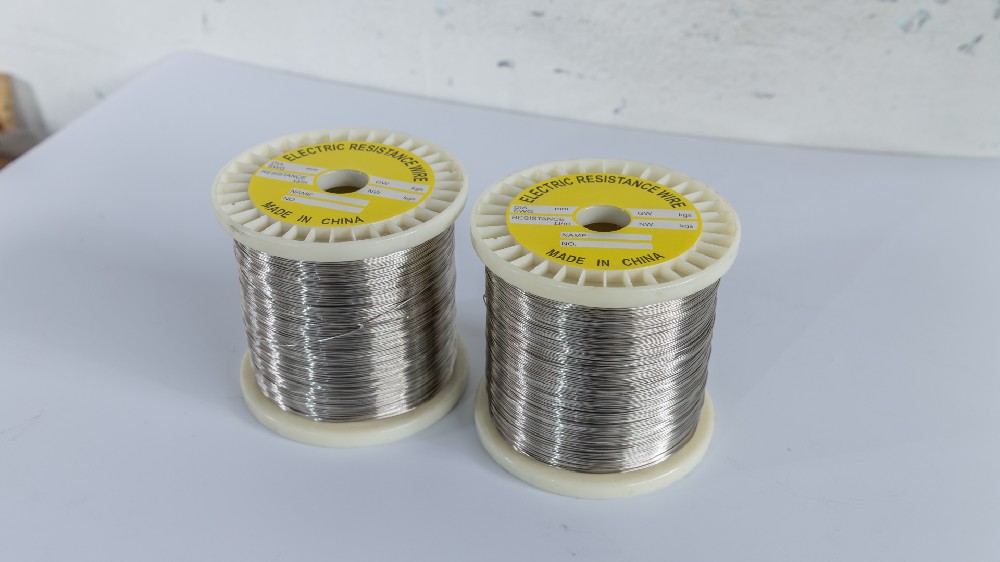
Copper wire is a resistance alloy mainly composed of copper and nickel. It is usually composed of 55% copper and 45% nickel, with a low temperature coefficient of resistance, a wide range of operating temperatures (below 480 ℃), good processing and welding performance. Copper wire is mainly used to make resistors and components in instruments, electronic equipment, and industrial equipment, and is suitable for use in AC circuits. In addition, there is a new type of constantan resistance alloy, which is a copper based alloy with similar electrical resistivity and temperature coefficient to constantan, but with lower price and poorer oxidation resistance. New constantan can replace constantan wire resistance alloy in some aspects, but in the production of fine resistors, manganese copper has higher accuracy.
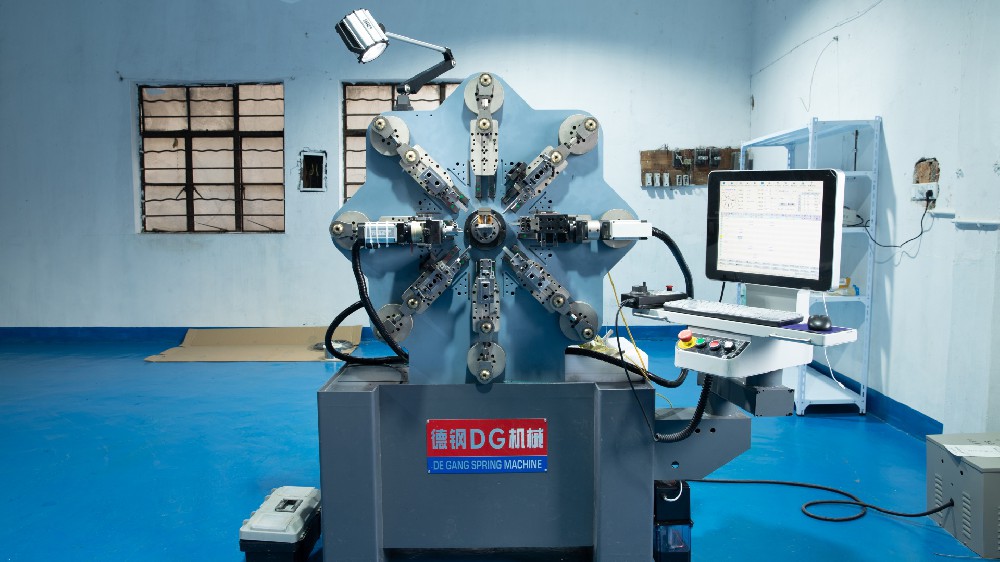
The principle of a spring machine is mainly based on Hooke's law, which states that the deformation of a spring is proportional to the force applied. When an external force is applied to a spring, the spring will deform and store elastic potential energy; When the external force disappears, the spring will return to its original state and release the stored energy, pushing the working parts to perform corresponding mechanical movements. The working process of a spring machine can be described as follows: the machine body fixes a section of spring steel wire at the tail of the spring machine, and through the drive of the driver, presses the steel wire into the forming mold at a moderate speed and force, causing the steel wire to deform. Finally, with the assistance of the machine body, the steel wire is wound into a predetermined shape, thereby manufacturing various types of springs. Spring machines have a wide range of applications, including automotive suspension systems, industrial machinery, clocks, toys, and other fields. Its design and application need to consider various factors, such as the material, size, stiffness of the spring, the design of the guiding device, and the characteristics of the working parts. Reasonable design can improve the efficiency and reliability of spring machines, extend their service life, and reduce maintenance costs.
Resistors can be mainly divided into the following types:1.Fixed resistor:Carbon film resistor: Depositing a layer of carbon film on a ceramic substrate is cost-effective and suitable for applications such as power circuits and simple amplifier circuits that do not require high accuracy.Metal film resistor: A layer of metal film is deposited on a ceramic substrate by vacuum evaporation or sputtering, which has the characteristics of high precision, low temperature coefficient, and good stability. It is commonly used in high-precision measurement circuits.Wire wound resistor: using resistance wires such as copper wire and manganese copper wire wound on the insulation skeleton, suitable for high-power and high-precision circuits.Cement resistance: The resistance wire is wound around a non alkaline heat-resistant ceramic piece, and protected and fixed with heat-resistant, moisture resistant, and corrosion-resistant materials on the outside. It is commonly used in circuits that require high power, such as power supply and motor control.2.Variable resistor:Potentiometer: It changes the contact position between the sliding arm and the resistor by rotating or sliding, and is commonly used in circuits that require continuous adjustment such as volume and brightness adjustment.Variable resistor: designed for regulating larger currents and power, suitable for motor speed control and electric furnace temperature control.3.Special resistance:Thermistors: including positive temperature coefficient (PTC) and negative temperature coefficient (NTC) thermistors, used for overcurrent protection, temperature compensation, and temperature measurement, respectively.Photoresistor: made of semiconductor materials such as cadmium sulfide or cadmium selenide, the resistance value changes with the intensity of light, and is commonly used in light controlled switches and light intensity measurements.Definition and basic characteristics of resistance:Definition: The obstruction of current by a conductor is called resistance, usually represented by the letter R and measured in ohms (Ω).Basic characteristics: Different conductors have different hindering effects on current, and resistance is a property of the conductor itself. The greater the resistance of a conductor, the greater its hindrance to current flow.
High temperature alloy wire plays an important role in multiple fields. Firstly, in the aerospace field, high-temperature alloy wire materials are widely used in the manufacturing of aircraft engines and missile components, such as turbine blades, jet nozzles, combustion chambers, etc., due to their excellent high-temperature oxidation resistance and corrosion resistance. These components need to work in environments with high temperatures and strong oxidation and corrosion, and high-temperature alloy wires can meet these demanding requirements.Secondly, in the field of energy, high-temperature alloy wires are widely used in high-temperature reactors and heat exchangers in industries such as petroleum, natural gas, and chemical. It can improve the service life and performance of equipment, adapt to high temperatures and corrosive environments.In addition, in the field of medical devices, high-temperature alloy wire materials are used to manufacture medical devices such as artificial bones, artificial joints, and implants due to their excellent corrosion resistance and wear resistance. These characteristics improve the quality and service life of medical devices.The composition and performance characteristics of high-temperature alloy wire mainly include various metal elements such as nickel, chromium, molybdenum, iron, etc., which have good high-temperature oxidation resistance and corrosion resistance. These characteristics make high-temperature alloy wire materials perform well in complex working environments and suitable for applications under various high temperature and high stress conditions.